
Most parents do not arrive at the search Autism Therapy Kolkata all at once. It usually starts smaller: a toddler who does not turn when you call his name, a relative who says “he will talk when he is ready”, a preschool teacher who mentions that your daughter would rather line up her crayons than play with the other children. Then comes the late-night search.
This guide is written for that moment. It explains what autism is and is not, which early signs are worth acting on, how autism is assessed, and what evidence-based therapy should look like, so that you can make decisions with clear information rather than fear.
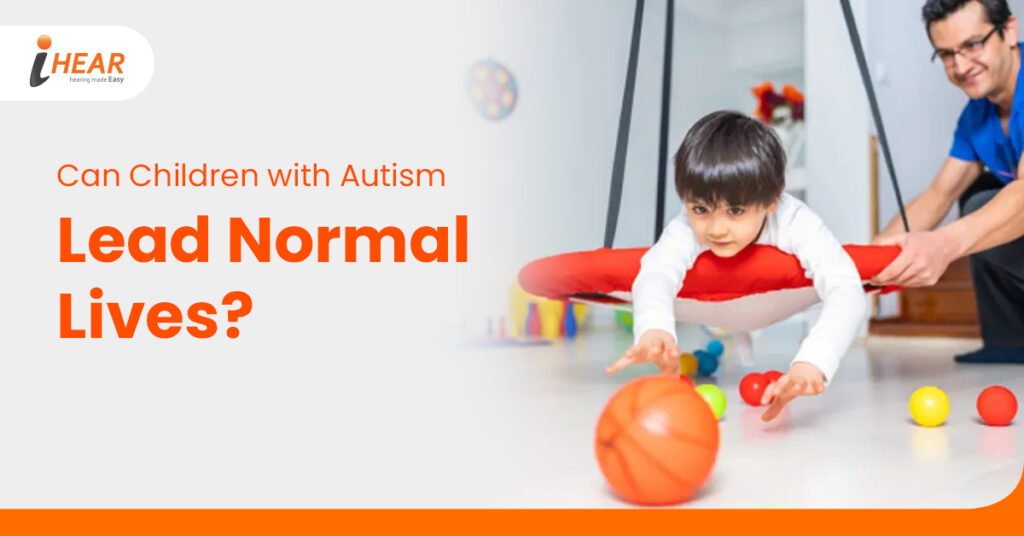
What autism is, and what it is not
Autism spectrum disorder (ASD) is a neurodevelopmental condition. The brain develops and processes information differently, particularly in social communication, sensory processing and flexibility of behavior. It is present from early childhood, it is lifelong, and it exists on a spectrum: an autistic child may speak fluently but struggle with friendships, while another may communicate mostly without words and need substantial daily support.
The World Health Organization describes autism as common, found in every country and every community. Autism is not rare and it is not new; we have simply become better at recognizing it.
Autism is not caused by parenting style, by a mother going out to work, by too little affection, or by vaccines. That last claim has been tested in very large studies across many countries and has not held up. Autism is not an illness a child catches, and it is not something a child grows out of or is cured of.
This matters because it changes what therapy is for. The goal of autism therapy is not to erase autism. The goal is to help your child communicate, learn, become as independent as possible and take part in family and community life, in ways that respect who they are.
Early signs worth paying attention to
Every child develops at their own pace, and no sign on its own means a child is autistic. But some patterns are worth discussing with a professional rather than waiting on:
- Not responding to their name as a baby, even though they react to other sounds around them
- Not pointing to show you things or share interest by the toddler years
- Limited eye contact and little back-and-forth in play, babbling or expressions
- Few or no words when other children the same age have started talking, or no short phrases when other children are combining words
- Losing words or skills they had earlier, at any age
- Repetitive movements such as hand-flapping, rocking or spinning, or intense attachment to routines and particular objects
- Unusual reactions to sound, texture, light or touch: covering ears at everyday noises, or seeming not to notice pain or cold
If several of these feel familiar, the next step is not to wait and watch but to ask for an assessment.
How autism is assessed
There is no blood test or brain scan for autism. Diagnosis is clinical, made by trained professionals such as a developmental pediatrician, child psychiatrist or clinical psychologist, working with speech-language and occupational therapists. It is based on:
- A detailed developmental and family history
- Direct observation of how the child communicates, plays and interacts
- Assessment of language, motor skills, cognition and the senses, so that co-occurring conditions are not missed
Experienced clinicians can reliably identify autism in the toddler years, well before a child starts school. A good assessment tells you not just whether your child is autistic, but what their strengths and needs are, because that is what the therapy plan is built from.
What evidence-based autism therapy should include
A search for Autism Therapy Kolkata brings up everything from small therapy rooms to large multidisciplinary centers. What separates effective support from expensive activity is not the size of the building but whether the therapy is evidence-based, individualized and measured. The approaches with the strongest research behind them include:
Speech-language therapy. Builds understanding, expression and the social use of language: taking turns, requesting, greeting, holding a conversation. For children who are not yet speaking, therapists use augmentative and alternative communication (AAC) such as picture exchange, sign or communication apps. Research is clear that AAC does not hold back speech; it often supports it, and it gives a child a voice now rather than later.
Occupational therapy. Addresses the everyday skills that make independence possible: feeding, dressing, toileting, handwriting, tolerating a haircut. It also works on sensory processing, helping a child who is overwhelmed by noise or touch, or who seeks constant movement, to regulate and join in.
Developmental and behavioral approaches. Structured teaching based on Applied Behavior Analysis (ABA), and naturalistic developmental behavioral interventions such as the Early Start Denver Model and JASPER, use play, the child’s own interests and everyday routines to teach communication and social skills. Modern practice is child-led and respectful: the aim is to teach useful skills, not to suppress harmless autistic behaviors like flapping or to train a child to “look normal”.
Parent-mediated intervention. Some of the strongest long-term evidence in autism comes from programs that coach parents to become their child’s most important therapist. A large clinical trial of parent-led communication therapy found benefits that were still measurable years later, and a version adapted for families in South Asia showed similar improvements in parent-child interaction. The World Health Organization’s Caregiver Skills Training program is built on the same principle. Whichever center you choose, you should be in the room learning, not waiting outside.
Special education and school readiness. Attention, following group instructions, pre-academic skills and social play, so that inclusion in a mainstream or special school becomes a realistic step.
A good plan combines these according to your child’s profile, sets specific goals (for example, “requests a snack with a picture card or a word in most opportunities”), records progress at every session and is reviewed with you regularly. The assessments and therapies offered at iHear are described on the services page.
Setting realistic expectations
Parents deserve plain answers, so here they are.
Therapy helps. Decades of research show that early, consistent, well-designed intervention improves communication, daily-living skills and quality of life for autistic children, and reduces the frustration behind many challenging behaviors. Progress is real, and it is often life-changing for the whole family.
Therapy does not cure autism, and you should be wary of anyone who says otherwise. Stem-cell injections, chelation, hyperbaric oxygen, “detox” protocols and restrictive diets are marketed to families every day. None has been shown to treat autism, and some, chelation in particular, have caused serious harm. A special diet is only appropriate when a doctor has diagnosed a medical reason for it, such as celiac disease. No medicine treats the core features of autism either. A pediatrician or child psychiatrist may prescribe medication for co-occurring problems such as epilepsy, severe sleep difficulty, ADHD or intense irritability, and that decision belongs with them, alongside therapy rather than instead of it.
Progress is individual. Children who start therapy at the same time can be in very different places later on, and none of them has failed. The right measure is your child against their own starting point: more words, fewer meltdowns, a new friendship, a full night’s sleep, a haircut without tears.
Questions to ask before you choose a center
When comparing centers, these questions will tell you most of what you need to know:
- Who will assess my child, and what are their qualifications? Look for RCI-registered therapists and clinicians with pediatric experience.
- Will I receive a written plan with specific goals, and how often is it reviewed?
- How much of the program involves training me to continue at home?
- How do you record and share progress?
- What happens when something is not working?
Be cautious of any center that promises recovery, discourages questions, or keeps parents permanently out of sessions.
What you can start doing today
While you arrange an assessment, small daily habits make a difference:
- Get down to your child’s level, follow what interests them, and name it: “Ball! Big ball!”
- Pause and wait. Give your child time to look, gesture or make a sound before you fill the silence.
- Turn routines into games: peek-a-boo at bath time, a song on the stairs, the same lullaby at bedtime.
- Trade some passive screen time for face-to-face play. Language grows from interaction, not from watching.
- Write down what you notice, with dates and short videos. Nothing helps an assessment more than a parent’s careful observations.
Take the next step
If something in this article sounded familiar, you do not need to wait for a school or a relative to confirm your instinct. An assessment is not a label; it is information, and information is what lets you act early.
iHear works with families from Kolkata and the neighboring districts. To arrange a developmental assessment, or to ask about Autism Therapy Kolkata at iHear, please reach the team through the contact page. For everyday tips on communication, play and routines, follow Autism Therapy Kolkata from iHear on Facebook.
Your child is not a problem to be fixed. They are a person to be understood, and the right support begins with that understanding.
This article is for general education only. For any concern about your child’s development, please consult a qualified professional.