
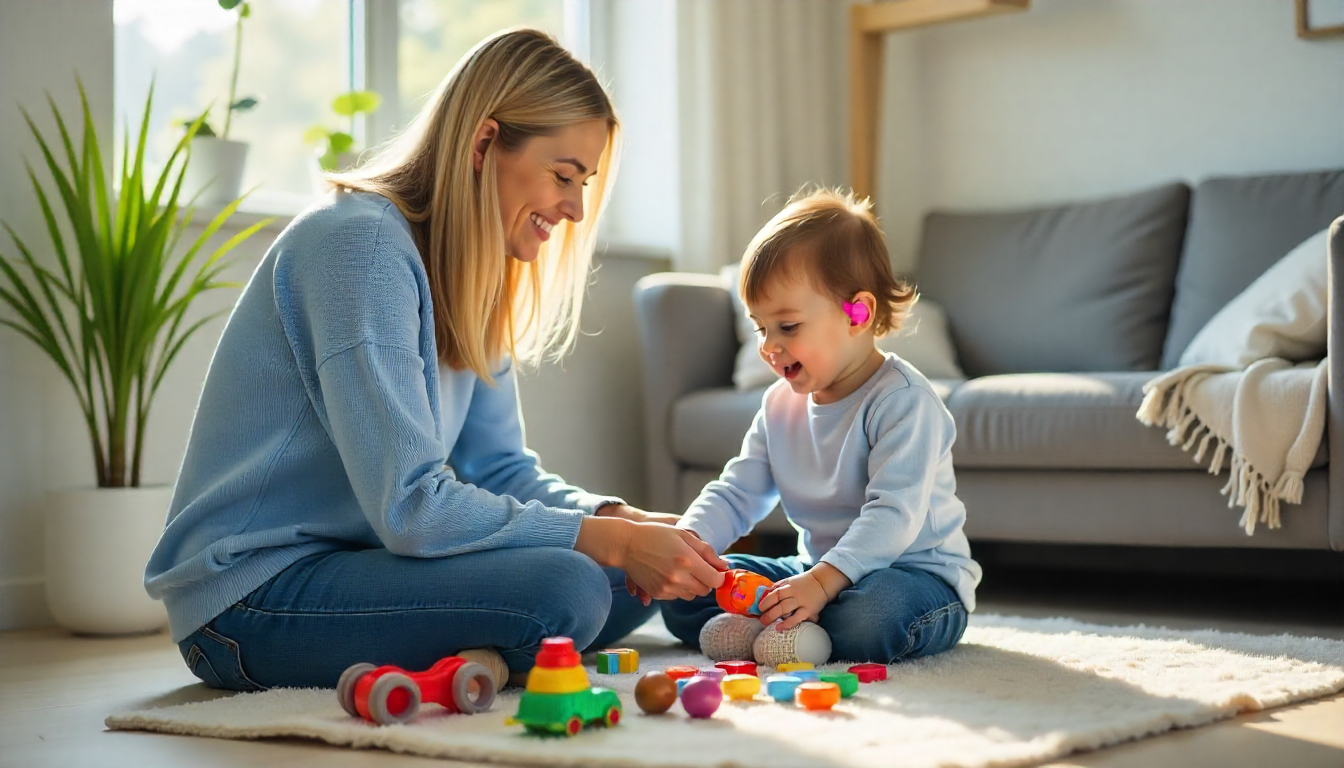
A Guide to Auditory Training for Children with Hearing Loss

Empowering Parents: A Guide to Auditory Training for Children with Hearing Loss
By Pankaj Sarkar, Audiologist & Speech-Language Pathologist, iHear, West Bengal
Introduction
When a child receives a hearing aid or cochlear implant, the journey does not end with “switching on” the device. The real progress happens through auditory training—teaching the brain to make sense of sounds.
At iHear, West Bengal, we strongly believe parents are the most important partners in this journey. With the right guidance, parents can turn everyday life into powerful listening and learning opportunities.

What is Auditory Training?
Auditory training helps children:
- Notice and respond to sounds
- Differentiate between everyday noises
- Recognize words and speech patterns
- Understand conversations and stories
It helps children move from simply hearing to truly listening and understanding.
The Four Stages of Auditory Skill Development
1️⃣ Detection – Becoming aware of sounds
- Example: Turning toward a bell or parent’s voice
- Parent Tip: Call your child’s name softly and wait for a response
2️⃣ Discrimination – Noticing differences between sounds
- Example: Distinguishing a car horn from a bird chirping
- Parent Tip: Play animal sound games (“Is this moo or meow?”)
3️⃣ Identification – Recognizing and labeling sounds/words
- Example: Choosing the ball when asked
- Parent Tip: Place two toys and ask, “Give me the car.”
4️⃣ Comprehension – Understanding meaning in context
- Example: Following instructions or answering questions from a story
- Parent Tip: Read short stories and ask simple questions

Everyday Strategies for Parents
- Reduce background noise when speaking
- Use “auditory first” approach (let child listen before showing)
- Perform daily device checks
- Talk during cooking, playing, or shopping
- Expand words: Child says “car” → You: “Yes, a red car is going fast”
- Sing rhymes and read stories every day
Fun Auditory Activities at Home
- Sound Hide and Seek – Hide a musical toy and let your child find it by listening
- Simon Says – Listening commands like “touch your ears” or “clap twice”
- Listening Walk – Outdoors: point out birds, cars, laughter, wind
- Story Time – Read aloud and ask questions

Tracking Progress
Keep a listening diary:
- Note new sounds your child responds to
- Record words they understand or speak
- Share diary with your therapist during sessions
Why Parents Matter Most
Therapy is only a few hours per week, but parents are with children all day. This makes parents the most powerful teachers. Turning simple routines—like cooking or walking—into listening practice makes a world of difference.
At iHear, West Bengal, we guide families step-by-step so that listening and language development becomes a natural part of home life.
Final Thoughts
Auditory training is not about drills—it’s about creating a world filled with meaningful sounds, words, and love. Every “good morning,” every story, every giggle is a step toward better listening and communication.
💡 Remember: Your voice is the most important sound your child will ever hear.