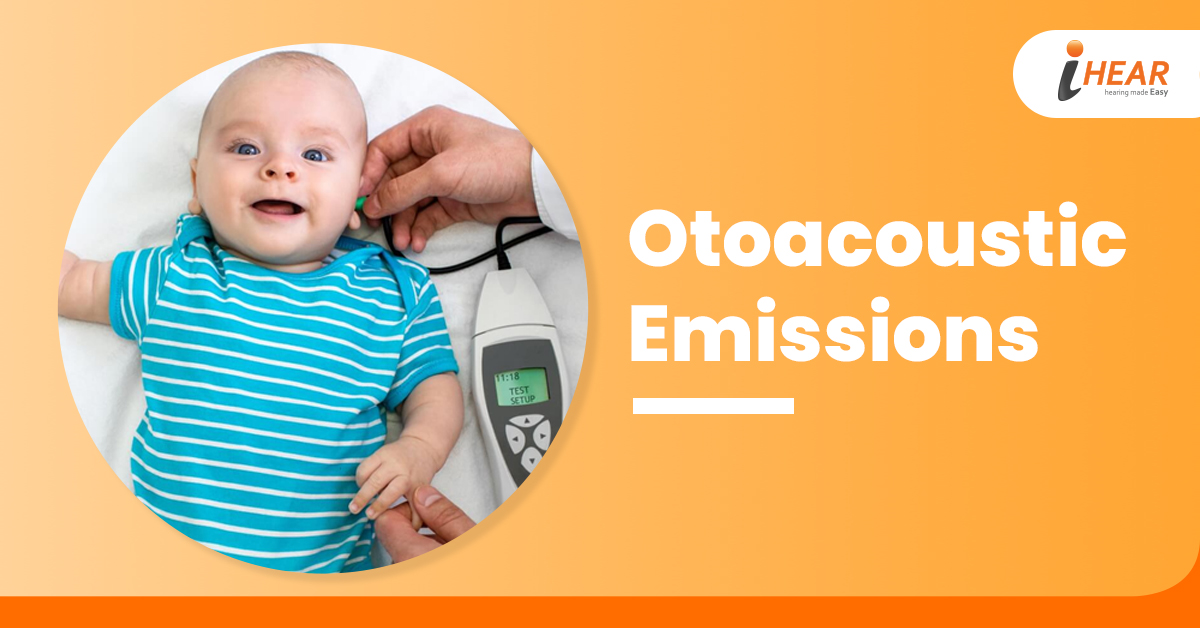
An otoacoustic emission (OAE) is a sound that is generated from within the inner ear. Broadly speaking, there are two forms of otoacoustic emissions: spontaneous otoacoustic emissions (SOAEs), which occur without external stimulation, and evoked otoacoustic emissions (EOAEs), which need an evoking stimulus.
About OAEs
Our ear is formed of three parts — the outer, the middle, and the inner ear. The OAE test looks to find out how well our inner ear, or cochlea, works. It measures otoacoustic emissions — sounds given off by the inner ear when responding to a sound. There are hair cells within the inner ear that respond to sound by moving. This vibration produces a very quiet sound that echoes into the middle ear. This sound is the OAE that's measured.
If a person has normal hearing, they can produce OAEs. If the hearing loss is greater than 25–30 decibels (dB), these soft sounds aren't produced.
This test also checks if there's a blockage in our outer or middle ear. If there's a blockage, no sounds will be able to get through to the inner ear, meaning there will be no vibration or sounds that return.
How the OAE Is Done
A small earpiece, or probe, is placed in your ear. The probe puts sounds into your ear and measures the sounds that return. You do not need to do anything or say anything during the test. The person conducting the test will see the results on the monitor screen. The OAE test is usually a part of a new-born hearing screening program.
Clinical Importance
Otoacoustic emissions are clinically important as they form the basis of a simple, non-invasive test for detecting hearing defects in new-born infants and in children who are too young to cooperate with typical hearing tests. Several western countries now have national programmes for the universal hearing screening of new-born babies, with a click-evoked OAE test as the first screening tool. Otoacoustic emissions also assist in the evaluation of cochlear implants and higher-level hearing losses (e.g., auditory neuropathy). Along with audiometric testing, OAE testing can be used to track changes in the responses.